Flash Tattoo Watch 02

The realization of Uglies technology continues!

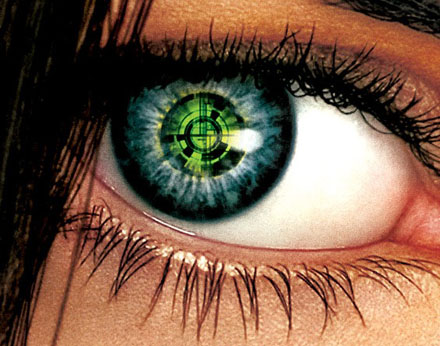
First, engineers at the University of Washington have developed an eyescreen-like contact lens:

linza1.jpg
Thanks to Erin-la for this catch!

In other news, howzabout some blood-powered flash tattoos?

tattoodisplay.jpg
Thanks to Jade Lennox and Temvald for kicking this to me!

This subcutaneous digital display uses the sugar in your blood and turns it into the electricity it needs to run. (And it’s Bluetooth compatible.) The article is a bit unclear about what stage this gadget’s at. The photo caption says the it’s being demonstrated, but the article says, “just a concept.” Well, “concept cars” are prototypes . . .

Anyway, it’s sort of like the flash tattoos in Uglies, because it monitors your bio-signs. Not your heartbeat in this case, but your blood chemistry. Seems to me that if it could control its own energy use, it would be great for diabetics.

If you read the articles for both these devices, they both mention cell phone applications. Like, dude, that is so 1997.

Extras Suffixes

I am snowed under with Leviathan, but there’s something on Wikipedia I’ve been meaning to show you guys.

Everyone always asks me about -wa and -la in the Uglies series. (The rule, by the way, is that you use -wa if you have an L in your name, and -la otherwise. So it’s Jane-la, Jose-la, and Maria-la, but Billy-wa.) Part of what inspired me to add these suffixes was my study of Japanese, which uses a complicated set of “honorifics.” These suffixes reveal how intimate you are with someone, how respected or famous they are, etc., so it made sense to put them in Extras.

Japanese honorifics are incredibly complicated (to us outsiders, anyway). So I kept it to just three: sama, chan, and sensei. Here’s how those suffixes work in Extras as opposed to modern-day Japanese:

In Aya’s world, sensei is used for anyone in the city’s top thousand most famous citizen.

But in Japanese (to quote this Wikipedia article):

Sensei is used to refer to or address teachers, practitioners of a profession such as doctors and lawyers, politicians, and other authority figures. It is used to show respect to someone who has achieved a certain level of mastery in an art form or some other skill. For example, Japanese manga fans refer to manga artists using the term sensei, as in Takahashi-sensei for manga artist Rumiko Takahashi; the term is used similarly by fans of other creative professionals such as novelists, musicians, and artists. It is also a common martial arts title when referring to the instructor.

In Aya’s city, sama is for people who are world famous—someone who comes up in your mind-rain history class, like Tally and Shay. In Japan . . .

Sama is the formal version of san. This honorific is used primarily in addressing persons much higher in rank than oneself and in commercial and business settings to address and refer to customers. It also appears in words used to address or speak of persons or objects for which the speaker wishes to show respect or deference, such as okyaku-sama (customer) or Tateishi-sama (a stone idolised as a deity). Additionally, Japanese Christians will refer to God in prayer as Kami-sama and Jesus as Iesu-sama. -sama is regularly used by the press to mention female members of the Imperial Family (as in Masako-sama). People will also affix sama to the names of personages who have a special talent or are considered particularly attractive, though this usage can also be tongue-in-cheek, exaggerated, or even ironic.

And finally, chan is for close friends and siblings (particularly if they’re younger), and cute devices like Moggle. This is pretty much the way it’s used nowadays, though there are more gender issues in present-day Japan than in Aya’s city. Here’s the full definition from Wikipedia:

Chan is an informal version of san used to address children and female family members. It may also be used towards animals, lovers, intimate friends, and people whom one has known since childhood. Chan continues to be used as a term of endearment, especially for girls, into adulthood. Parents will probably always call their daughters chan and their sons kun, though chan can be used towards boys just as easily. Adults may use chan as a term of endearment to women with whom they are on close terms . . . . ‘Pet names’ are often made by attaching chan to a truncated stem of a name. This implies even greater intimacy than simply attaching it to the full name. So for example, a pet rabbit (usagi) might be called usa-chan rather than usagi-chan. Similarly, Chan is sometimes used to form pet names for celebrities. For example, Arnold Schwarzenegger gained the nickname Shuwa chan in Japanese.

Terminator-chan. Hmm.

Other than -wa and -la, do you guys use any weird forms of address with your friends?

Flash Tattoo Watch 01

Is it just me, or are the flash tattoos out in force these days?

This bit of tat-spotting comes to us courtesy of Gabrielle:

Now I know that facial tattoos have been around for millennia, but I’m seeing a lot these days that seem to look very Special Circumstances-ish. Maybe that’s because my Special tats were based on those of the Maori (the people who got to New Zealand 600 years before Europeans did their “discovering” thing). Maybe there’s just been an upsurge in awareness of Maori culture, or maybe it’s all about henna.

Still, I’d be interesting to know how many of you have spotted sort-of flash tattoos in popular culture lately. Anyone besides Gabrielle?

Zombie Zeitgeist Redux

Over at Inside a Dog, YA writer Maureen Johnson has just extended and expanded her Insert a Zombie, Win a Prize contest.

The basic concept is that any scene in any book would be better with a zombie, a truth universally acknowledged among certain of us genre fans. (Scroll down to the blue text in this post for Maureen’s own example, featuring a zombie in Pride and Prejudice.) To enter the contest, just take a scene from any book and add a zombie to it.

For the contest’s new and improved iteration, celebrity judges Meg Cabot, John Green, E. Lockhart, and Justine Larbalestier will choose the winning entry!

Here’s my entry, though I probably won’t win, given that I’m married to one of the judges.

Charles Dickens’ A Tale of Two Zombies.

It was the best of apocalypses, it was the worst of apocalypses. It was an age of brain eating, it was an age of shotguns. It was the epoch of damaging the head, or of removing it from the body. It was the season of light infantry weapons, it was the season of dark pursuits through abandoned sewers. We had everything at the local mall before us, but there were too many zombies in the way. In short, the period was so far like the present period—except for, you know, all the frickin’ zombies.

Go and enter!

Here are the roolz:

1) Keep it to one paragraph. (250 words or less. Less is better.)
2) Make sure to give the title and author, so we can know whose work is being zombified. If these are not given, the zombified work will not be considered!
3) E-mail the entry to maureen@maureenjohnsonbooks.com. Please use the subject line: ZOMBIE INSIDE! You may enter as many times as you like. (So, if you want to zombify 30 stories, you can! But they must be different ones each time.) The deadline is February 14th. You can go right up to midnight (US, east coast time).
4) All of these wonderful entries will be read by Maureen and the other judges.

Round one: this week on insideadog . . . deadline, end of day, February 14th. The first five semi-finalists will go up to voting on the 15th. The prize for winning this round is the final copy of Maureen Johnson’s Suite Scarlett.

Round two: next week on Maureen Johnson’s blog . . . all entries submitted between February 16 and February 21st, with the next semi-final on February 22nd.

This all leads up to the crowning of the ULTIMATE ZOMBIE on Monday, February 25th.

5) You know who picks the winner? YOU DO! It’s ZOMBIE IDOL!

This just in: Justine adds a zombie to James Joyce’s Ulysses.

Us on Cult-Pop

While we were at ConFusion, Justine and I sat down with Jim Hall of Cult Pop, a local Detroit cable show about “anything interesting.” (Usually, this means science fiction writers.)

For those of you who live in southeastern Michigan, you’ll find it airing on Comcast (channel 20).

Luckily for those you who don’t, Cult Pop is also available online. Click here to go to the Cult Pop site, then click on #13 to see us. (A lot of other cool people are on that list too.)

Notice that I cleverly wore a shirt that would strobe attractively, plus I was slumping:

cultpop.jpg

Also, as many adult interviewers do, Jim asks us a lot of questions about what YA is. You guys might find our answers non-earth-shattering on that score. But it’s a half hour (!) of fun and excitement, with lots of news about my and Justine’s next books.*

Enjoy.

*Speaking of which, Leviathan is almost 25,000 words long!

Alaska-Phobia

So, you’re a parent of a 9th grader in Depew, NY, and you hear that the 11th graders in your school are reading a book. The parents of those children have to sign a release, because the book is “edgy.” If the parents don’t sign, their kids won’t have to read the book.

So you decide to read the book, even though it has nothing to do with your kid. And when you don’t like it, you try to prevent the older kids of those other parents from being allowed to read the book. That’s just how awesome a citizen you are!

John Green gives the details here:

John sums up what we all should try to remember about book banners: They aren’t trying to protect their children, they’re trying to protect someone else’s children. They aren’t wishing other people would make better choices, they’re trying to prevent every choice they disagree with. They know what everyone else should and shouldn’t read. And yet, overwhelmingly, their readings of the books they protest are flawed and simplistic.

Just remember: Book banners are not as smart, wise, or important as they think they are. And you’re much smarter, wiser, and able to deal with complexity than they think you are.

They are the junk mail of literary discourse.

Click here to see John’s post.

Life = Art

Here are a couple of real-life (if speculative and fanciful) glimpses into the Uglies universe.

First this one . . .

cat9_image.jpg

What is that? A special? A pretty with some fairly heavy flash tattoo action?

Nope. It’s a Claritin makeup ad.

And check this out . . .

bioniceye.jpg

And eyescreen? Well, yeah, sort of.

Implanting a micro-camera directly into the eyeball may be a future solution for restoring sight to people with damaged vision, according to this patent application. The camera could be charged wirelessly, and communicate directly with a chip implanted at the back of the eye, so very little external hardware would be needed.

It’s from an article over at Gizmodo about installing a camera into the eye. So it wouldn’t just be an eyescreen, delivering data into the visual field, but also a camera, taking in real-world information to pass onto the visual cortex.

Maybe it’s not working technology yet, but it’s far along enough for a patent application. (Not that people wait very long for that these days, but still.)

Anyway, I thought I’d share those images with you. Working too hard on Leviathan to blog much. Sorry!

Update: The Claritin ad was sent to me by Tali (short of Natalia) Eldering. Thanks, and sorry I forgot to mention that the first time!

Alpha Writing Workshop

Back in 2005 I was a teacher at Clarion South, the Australian wing of the annual “science fiction writers’ boot camp.” Basically, Clarion is a six-week residential course (“residential” meaning you live there) where 15 prospective writers take classes from experts in the field, write a short story a week, and critique each other.

It’s a life-changing experience. At every sf convention I see former Clarionites screaming when they recognize each other, then rushing into hugs. I’ve happily watched my own Clarion students publish a slew of great stories and three novels (so far). We’ve all stayed in contact since, sharing the trials and tribulations of the writing life.

The vastness of Clarion’s effects isn’t surprising, though. What Justine and I have learned from our writing vacations in Mexico , Argentina, and Bangkok, is that there’s something that happens to your brain when it focuses solely on writing, away from friends and family. For a lot of graduates, Clarion is the first time that has ever happened

What I didn’t know is that there’s also a sort of mini-Clarion for teenagers, called Alpha.

alpha.jpg

The ALPHA SF/F/H Workshop for Young Writers (ages 14 – 19) will be held at the University of Pittsburgh’s Greensburg Campus July 16 – 25, 2008 in conjunction with Pittsburgh’s science fiction convention, Confluence, July 25 – 27th.

We’re looking for enthusiastic, talented young writers who have a strong interest in science fiction, fantasy and/or horror and a passion for writing.

Come spend ten days working with professional authors, each of whom will spend two days at the workshop.

There are four instructors this year, including the wonderful Tamora Pierce. The application deadline is March 1, and the workshop costs $950, which sounds pretty good for a private room, food, and a life-changing experience.

Click here for the details.

A bonus: Acceptance is based solely on the short story you submit. No high-school transcripts or stupid essays about what famous person in history you’d like to meet!