Flash Tattoo Watch 02

The realization of Uglies technology continues!

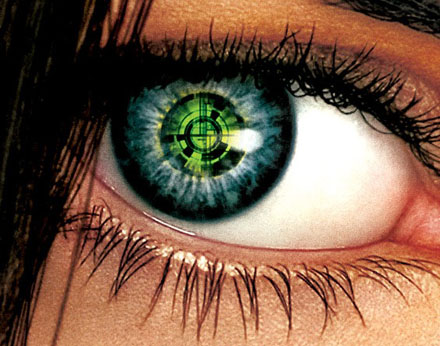
First, engineers at the University of Washington have developed an eyescreen-like contact lens:

linza1.jpg
Thanks to Erin-la for this catch!

In other news, howzabout some blood-powered flash tattoos?

tattoodisplay.jpg
Thanks to Jade Lennox and Temvald for kicking this to me!

This subcutaneous digital display uses the sugar in your blood and turns it into the electricity it needs to run. (And it’s Bluetooth compatible.) The article is a bit unclear about what stage this gadget’s at. The photo caption says the it’s being demonstrated, but the article says, “just a concept.” Well, “concept cars” are prototypes . . .

Anyway, it’s sort of like the flash tattoos in Uglies, because it monitors your bio-signs. Not your heartbeat in this case, but your blood chemistry. Seems to me that if it could control its own energy use, it would be great for diabetics.

If you read the articles for both these devices, they both mention cell phone applications. Like, dude, that is so 1997.

Extras Suffixes

I am snowed under with Leviathan, but there’s something on Wikipedia I’ve been meaning to show you guys.

Everyone always asks me about -wa and -la in the Uglies series. (The rule, by the way, is that you use -wa if you have an L in your name, and -la otherwise. So it’s Jane-la, Jose-la, and Maria-la, but Billy-wa.) Part of what inspired me to add these suffixes was my study of Japanese, which uses a complicated set of “honorifics.” These suffixes reveal how intimate you are with someone, how respected or famous they are, etc., so it made sense to put them in Extras.

Japanese honorifics are incredibly complicated (to us outsiders, anyway). So I kept it to just three: sama, chan, and sensei. Here’s how those suffixes work in Extras as opposed to modern-day Japanese:

In Aya’s world, sensei is used for anyone in the city’s top thousand most famous citizen.

But in Japanese (to quote this Wikipedia article):

Sensei is used to refer to or address teachers, practitioners of a profession such as doctors and lawyers, politicians, and other authority figures. It is used to show respect to someone who has achieved a certain level of mastery in an art form or some other skill. For example, Japanese manga fans refer to manga artists using the term sensei, as in Takahashi-sensei for manga artist Rumiko Takahashi; the term is used similarly by fans of other creative professionals such as novelists, musicians, and artists. It is also a common martial arts title when referring to the instructor.

In Aya’s city, sama is for people who are world famous—someone who comes up in your mind-rain history class, like Tally and Shay. In Japan . . .

Sama is the formal version of san. This honorific is used primarily in addressing persons much higher in rank than oneself and in commercial and business settings to address and refer to customers. It also appears in words used to address or speak of persons or objects for which the speaker wishes to show respect or deference, such as okyaku-sama (customer) or Tateishi-sama (a stone idolised as a deity). Additionally, Japanese Christians will refer to God in prayer as Kami-sama and Jesus as Iesu-sama. -sama is regularly used by the press to mention female members of the Imperial Family (as in Masako-sama). People will also affix sama to the names of personages who have a special talent or are considered particularly attractive, though this usage can also be tongue-in-cheek, exaggerated, or even ironic.

And finally, chan is for close friends and siblings (particularly if they’re younger), and cute devices like Moggle. This is pretty much the way it’s used nowadays, though there are more gender issues in present-day Japan than in Aya’s city. Here’s the full definition from Wikipedia:

Chan is an informal version of san used to address children and female family members. It may also be used towards animals, lovers, intimate friends, and people whom one has known since childhood. Chan continues to be used as a term of endearment, especially for girls, into adulthood. Parents will probably always call their daughters chan and their sons kun, though chan can be used towards boys just as easily. Adults may use chan as a term of endearment to women with whom they are on close terms . . . . ‘Pet names’ are often made by attaching chan to a truncated stem of a name. This implies even greater intimacy than simply attaching it to the full name. So for example, a pet rabbit (usagi) might be called usa-chan rather than usagi-chan. Similarly, Chan is sometimes used to form pet names for celebrities. For example, Arnold Schwarzenegger gained the nickname Shuwa chan in Japanese.

Terminator-chan. Hmm.

Other than -wa and -la, do you guys use any weird forms of address with your friends?

Flash Tattoo Watch 01

Is it just me, or are the flash tattoos out in force these days?

This bit of tat-spotting comes to us courtesy of Gabrielle:

Now I know that facial tattoos have been around for millennia, but I’m seeing a lot these days that seem to look very Special Circumstances-ish. Maybe that’s because my Special tats were based on those of the Maori (the people who got to New Zealand 600 years before Europeans did their “discovering” thing). Maybe there’s just been an upsurge in awareness of Maori culture, or maybe it’s all about henna.

Still, I’d be interesting to know how many of you have spotted sort-of flash tattoos in popular culture lately. Anyone besides Gabrielle?

Life = Art

Here are a couple of real-life (if speculative and fanciful) glimpses into the Uglies universe.

First this one . . .

cat9_image.jpg

What is that? A special? A pretty with some fairly heavy flash tattoo action?

Nope. It’s a Claritin makeup ad.

And check this out . . .

bioniceye.jpg

And eyescreen? Well, yeah, sort of.

Implanting a micro-camera directly into the eyeball may be a future solution for restoring sight to people with damaged vision, according to this patent application. The camera could be charged wirelessly, and communicate directly with a chip implanted at the back of the eye, so very little external hardware would be needed.

It’s from an article over at Gizmodo about installing a camera into the eye. So it wouldn’t just be an eyescreen, delivering data into the visual field, but also a camera, taking in real-world information to pass onto the visual cortex.

Maybe it’s not working technology yet, but it’s far along enough for a patent application. (Not that people wait very long for that these days, but still.)

Anyway, I thought I’d share those images with you. Working too hard on Leviathan to blog much. Sorry!

Update: The Claritin ad was sent to me by Tali (short of Natalia) Eldering. Thanks, and sorry I forgot to mention that the first time!

Radio Interview

radio.jpg

I did an interview with Public Radio International late last year, and the results have finally appeared online in an episode of To the Best of Our Knowledge, called “Apocalyptic Fictions.” I’m one of three authors (and one editor) interviewed. The whole thing is pretty interesting, featuring tales of zombies, warnings of mass extinctions, and ponderings of epidemics. What’s not to love?

I’m a bit out of place, actually, talking about the post-apocalyptic world of Uglies and Extras. All the other books are set during an apocalypse, which is a different sort of thing. Still, I’m always happy to be included.

Here’s radio KUAR’s page about the episode.

And here’s the MP3 if you want to listen to the show.

If you’re in a hurry and want to skip the other authors, I’m the last interview, about 75% of the way in. But they’re all good, really.

Warning: If you saw me on tour, the stories may sound a bit familiar. But I’ve only got so many jokes in me, okay?

Favorite Quotations

We might have a Favorite Quotations section in Tally’s World: The Ultimate Guide to the Uglies Universe. So I thought I’d ask you guys what your fave quotes are.

Here are mine:

“What you do, the way you think, makes you beautiful.” -David, Uglies

“I can’t imagine anything worse than being required to have fun.” -Shay, Uglies

“Of course, a hoverboard. What is it about those things and miscreants?” -Dr. Cable, Uglies

“So wait. You have jewels in your eyes? And they tell time? And they go backwards? Isn’t that maybe one thing too many, Shay?” -Tally, Pretties

“I thought that food of the gods would be . . . better, somehow.”
“Hey, this is dehydrated food of the gods, okay?” -Andrew and Tally, Pretties

“Freedom has a way of destroying things.” -Tally, Specials

“It doesn’t take much convincing to make someone believe they’re better than everyone else.” -Tally, Specials

“I’m not trying to be mysterious. It’s just working out that way.” -Aya, Extras

“I know what it’s like to be manipulated, Aya-la. And I know what it’s like to be in danger. While your city was building you mansions to live in, my friends and I have been protecting this planet. We’ve spilled more blood than you have flowing in your veins. So don’t try to make me feel guilty!” -Tally, Extras

Feel free fill this comment thread with your own suggestions. I’d prefer to stick to things that the characters actually say, rather than my own spare prose. But we’ll see.

Let the quoting begin!

tallysworld.jpg

Warning! Nanos!

Those of you who’ve read Specials may remember a certain scene involving extremely dangerous nano-scale weapons (also known as “nanos”). Although weaponized nanos don’t exist yet, nanotech is real, and the potential for dangerous nanos abounds.

In this context, “nanotechnology” means any widget that’s between 1 to 100 nanometers across. A nanometer is a billionth of a meter, so we’re talking down at the level of molecules and even atoms. At present, most nanos are used in fairly boring ways: sunscreen, paint, varnish. But in the near future, nanotech will no doubt be used in computing, mechanical design, and (because it’s what we upright monkeys are best at) killing each other.

Luckily, the good people at Etc Group have started a competition for a Nano Warning symbol, like the biohazard trefoil or other hazard symbols. So when anyone stumble across a defunct nano weapon like Shay and Tally did in Specials, they’ll know not to mess with it.

Here are my three faves so far:

nanohazard.jpg

I like the spider-y one, because it plays on atavistic fears of small crawly things. The broken hexagon refers to the carbon structures that most nanos use. The magnifying glass with a ! will probably look quaint 300 hundred years from now, but it amuses me.

Click here to see the rest and vote for your favorites. The molecular structure you save may be your own.

(Via BoingBoing)

Uglies Guide

So there’s some mutterings around these parts of doing a sort of Guide to the Uglies Universe. You know what I mean: one of those books full of background data about the people, places, and gadgets of Tally’s world, maybe containing a few diagrams, glossaries, and maps for your fannish perusal.

Holly Black and Tony DiTerlizzi’s Spiderwick Chronicles has the wonderful and richly illustrated Field Guide. Erin Hunter’s Warriors books have a similar companion work, though with more text than pictures.

So what would you guys want in a guide to the Uglyverse? What questions remain unanswered? What background info do you demand?

Here is your chance to ask questions and to list obscure gadgets, slang, places, and characters that you want to know more about.

tallysworld.jpg

Warning: Lame cover mocked up by me. Not in any way real (yet).

Number 12 Looks Suspiciously Familiar

Most of you may already know that a Twilight Zone episode from 1964 is an early example of the dystopia presented in Uglies. It’s called “Number 12 Looks Just Like Me,” and is based on a short story by Charles Beaumont called “The Beautiful People.” Some enterprising soul has posted the entire thing to YouTube.

number12.jpg

The poster has set the video to not embed, but click below to watch the three parts:
Part 1
Part 2
Part 3

Until last night, I hadn’t seen this gem since I was a little kid, so I’d forgotten all the details. Especially the phrase “pure perfection of pigmentation” (appearing 15 seconds into part 2), which is particularly creepy given how white everyone in the episode is. (Despite what the US covers for Uglies suggest, in Tally’s world everyone is racially averaged, or at least pushed toward the middle of the bell curve.) Note also the disturbing moment when the protag’s mother says to her braindeadmaid, “I don’t understand why you people have so much trouble with first names.” Hmm.

I’d also forgotten that in “Number 12” people look so much alike that they need name tags (obviously not the case in Tally’s world—my future is bell curvy, not cookie cutter). Here the facial choices are so limited that all fourteen characters are played by four actors. And what is it about the extreme minimalism of sf sets? Get some frickin’ posters for your walls, future people!

And some, um, better clothes.

Of course, compulsory plastic surgery is a venerable theme in sf. Not surprising, given that the first elective nose job occurred about a century ago, about the same time as H.G. Wells was writing War of the Worlds. (Fun fact: the earliest known skin grafts were performed in India 2800 years ago!) Other early fictional examples of compulsory cosmetic/brain surgery include L.P. Hartley’s 1960 story Facial Justice, Kurt Vonnegut’s “Harrison Bergeron” (1961), and of course Ira Levin’s Stepford Wives (book: 1972; films: 1975, 2004).

But it’s great to see this classic again. Thank you, anonymous copyright-flouting YouTube user!

(And look! The episode’s Wikipedia page mentions Uglies!)